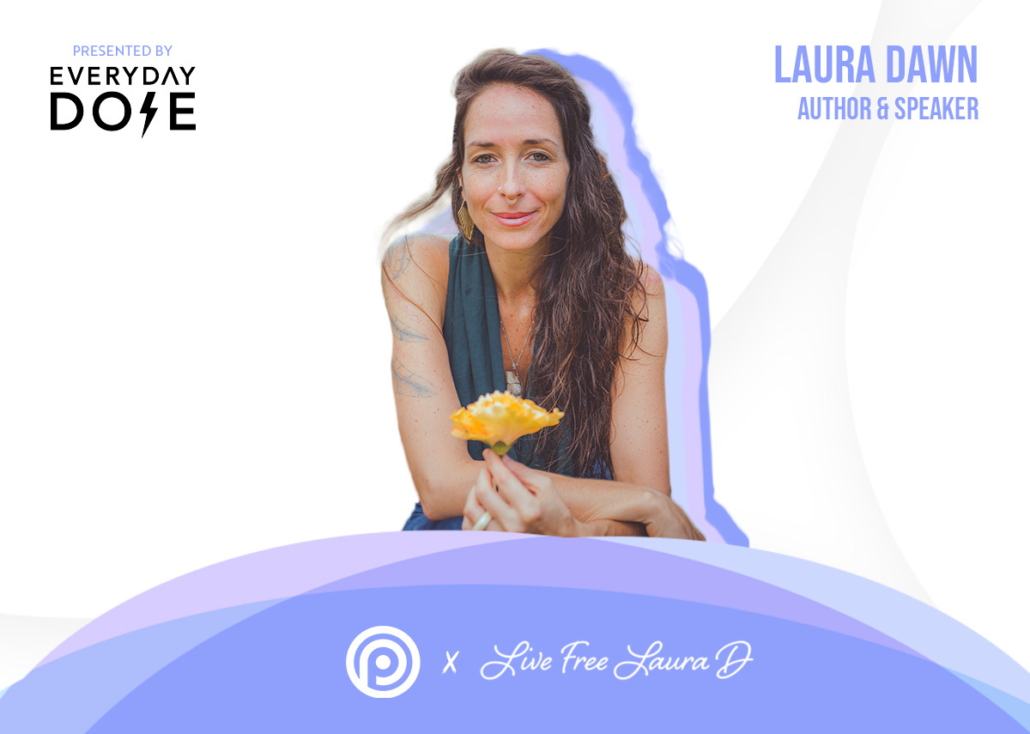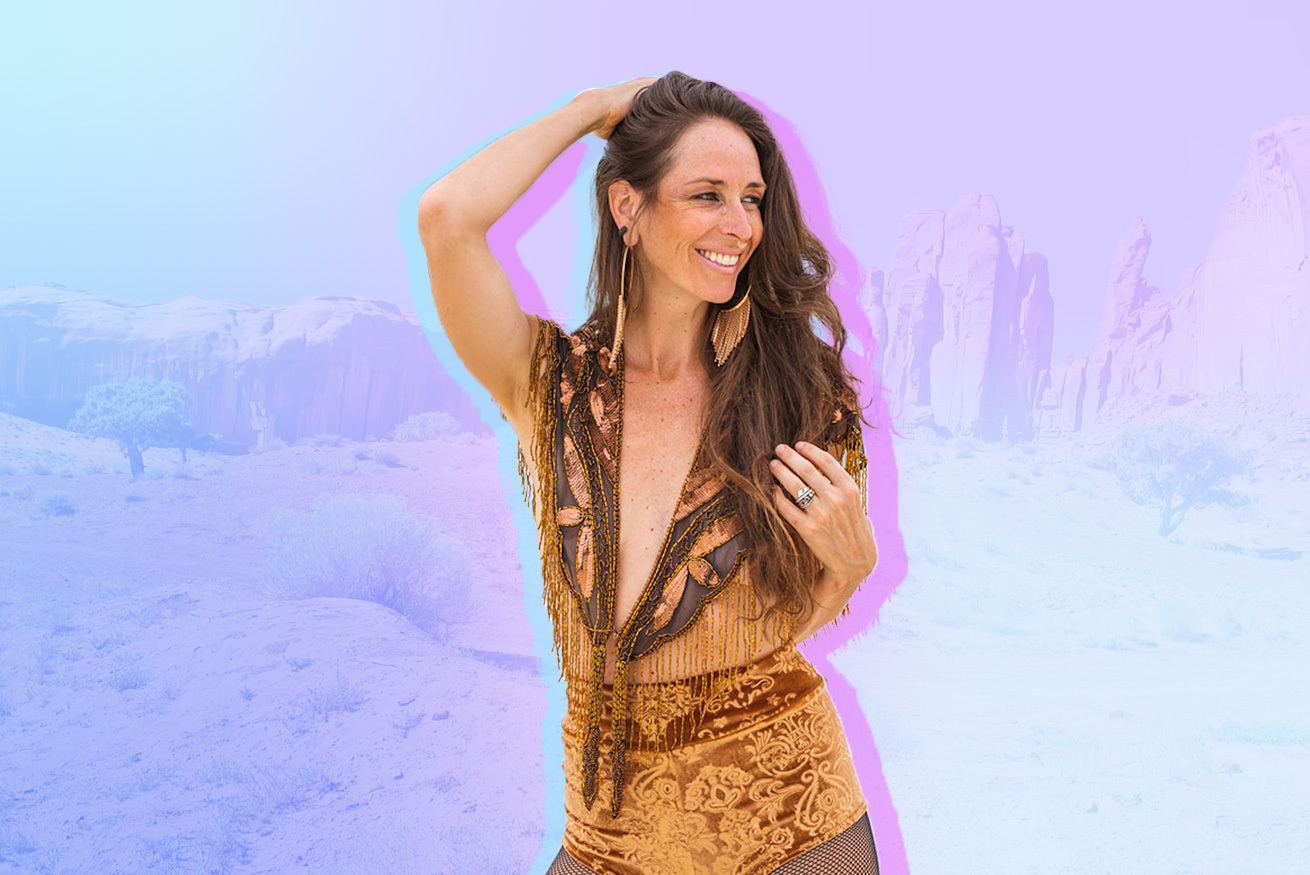
Microdosing mentor Laura Dawn was fresh out of school and on the fast-track for success in the financial industry when a dose of psychedelic-fueled clarity made her turn her back on a traditional business career, give away most of her belongings, leave her hometown of Montreal, and set out on the adventure of a lifetime.
In her appearance this week on the Psychedelic Spotlight podcast, the author, speaker, and plant medicine advocate opened up about her unique childhood—which included pitching business ideas during family dinners—and how it put her on a pathway toward psychedelic entrepreneurship.
Laura said a high-dose psilocybin experience at the age of 14 or 15 first encouraged her to “live and lead outside the box.” She continued experimenting with psychedelics after that but often found more questions than answers. “[I’d] look up at the vastness of the universe and think, ‘Wow, I’m here for just such a short amount of time. What do I want to contribute?'” she recalled.
“I was really struggling with depression and addiction, and I was really unhappy, and I saw the trajectory of my life, and I just really looked at that, and I was like, ‘You know what? This doesn’t have to be my life. I can choose the life that I want to live,'” Laura continued.
She left finance, she left Canada, and she upended her life in several ways but never lost her entrepreneurial spirit. In the decades since, Laura found success on several fronts, from popular books and podcasts to international speaking engagements. She also hosts psychedelic leadership seminars from her very own retreat center on Hawaii’s Big Island, and shows others how to benefit from microdosing.
“[I’m] looking at how we can leverage psychedelic experiences to help us become more heart-centered leaders who are really focused on contributing to the betterment and awakening of humanity,” she said.
Opening up about her own awakening, Laura credited ayahuasca microdosing with helping to expand her mind. “I feel like it’s taught me what it means to be a visionary,” she said.
She recalled the one batch of medicine in particular that changed her life. “I really experienced surrender for the first time,” she said, explaining it moved her so much she wrote a song.
Laura was moved the next morning, too—literally. She woke up to the island shaking from a series of volcanic earthquakes. A nearby road split open and started spewing lava. The disaster wreaked havoc on the retreat center she’d been building, which sent her into a downward spiral.
“I went into a dark night of the soul that lasted for about a year, but there was a pinhole of light that was from the medicine saying, ‘This is the path to letting go,'” Laura recalled. “That’s when I really came out of the psychedelic closet and I knew it was time to dedicate myself publicly to helping support people on this healing path with plant medicines.”
Indeed, Laura’s been a public advocate for psychedelics ever since. While her work has earned her praise, she’s also encountered critics arguing ayahuasca belongs to the indigenous peoples of the Amazon basin.
Laura didn’t shy away from the subject.
“I will also speak to the fact that I am a white woman, and I am working with ayahuasca medicine, and I know that some people have a very big problem with that,” the microdosing expert told Psychedelic Spotlight podcast host Swati Sharma. “I accept that perspective and I also believe that I’m a human being feeling the call—just like many other human beings have over time—to cultivate a relationship with a plant teacher.”
“A 99 percent of people really support the work that I’m doing, but I do get criticism from a small percentage of people who really do hold the belief that only indigenous people should be working with these medicines and that I have no right,” she continued.
Their point wasn’t lost on Laura, who revealed her next project was a non-profit venture called Grow Medicine aimed at promoting conservation and sustainability. “I’m really dedicated to the cultivation of these plant medicines to make them more accessible for people who want to do this work in a safe way,” she finished.
Listen to the entire podcast episode below.