Psychedelics have gone from being the government’s “public enemy number one” in the 1970s to highly lauded next-generation drugs capable of combating the global mental health crisis. Given the controversial history of psychoactive substances in Western culture, one can’t help but wonder: Is all this progress too good to be true?
Perhaps the overwhelmingly positive response to Michael Pollan’s psychedelics book, How to Change Your Mind, and all the positive media coverage of promising research in recent years, complete with a major resurgence in pop culture, is merely an inflation of a bubble ready to burst at any moment. In fact, many psychedelic enthusiasts were very concerned that Hulu drama Nine Perfect Strangers would spark such a backlash, because of some very inappropriate psychedelic therapy practices portrayed in the series. Or maybe it’s just paranoia.
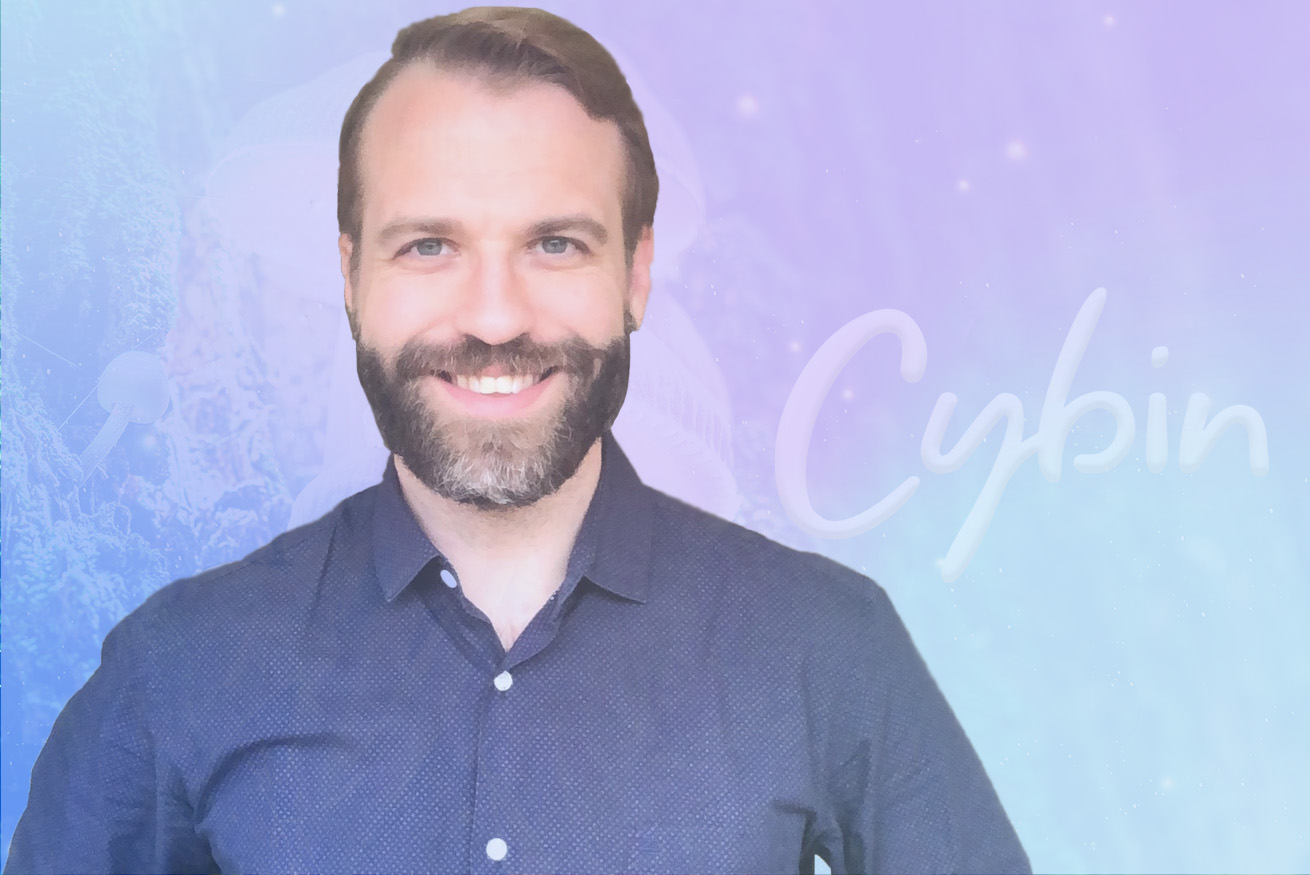
So, when I had the opportunity to speak with Dr. Alex Belser, the chief clinical officer at Cybin, a Canadian biotechnology company hard at work developing psychedelic-inspired medicines to revolutionize mental healthcare, I had to ask. Does a licensed psychologist and clinical supervisor with 20 years of experience in the psychedelic research community think that this boom could go bust?
“We see less and less evidence of that. I think that there’s potentially a strong and robust future in the practice of psychedelic medicine,” said Belser, whose research into psilocybin and MDMA has been featured in The New York Times, The Atlantic, The New Yorker, The Guardian, and even in Pollan’s book.
“My inbox and phone are blowing up with young graduate students, undergraduates, [and] faculty members who want to teach about psychedelics [and] include that in their coursework. Something that people used to speak about only in whispers is now standard policy,” he continued. “The next generation of researchers, psychologists, psychiatrists, neuroscientists, and chemists, they’re on board with psychedelic medicine. And there’s no reason to believe that interest is going to wane.”
Read on for the rest of our conversation, including his inspiration to devote his life to exploring psychedelics, the novel Cybin drug he’s most excited about, the future of mental healthcare treatment, and misconceptions the public still has about psychoactive substances.
What are some of your biggest motivations to research and develop psychedelic medicine?
As a psychologist, I’m passionate about psychotherapy, and working with people as they try to change their lives. I have been frustrated with some traditional approaches—traditional psychopharmacology, traditional psychiatry, good old fashioned psychotherapy.
When I started getting involved and going to psychedelic conferences, first in 2001, I was just blown away by some of the stories that people were telling. And then, when the first studies started coming out, and we first started treating people at New York University, for example, talking with patients and seeing what it was like, I just felt like this is this is the future of psychology and psychiatry.
Psychedelic medicine is really a revolutionary approach to mental health and well being, and I sensed this could be the the work that I could do for the rest of my life, and find it meaningful and intrinsically valuable. And it helps me come alive as a practitioner, and it feels so good to talk to people that are helped by it. So, I’ve been dedicating my life to trying to do that full time. And it’s hard, and there’s challenges with psychedelic medicine that we need to address, but it’s well worth it.
What sparked your interest to study psychedelics?
A friend in college gave me a copy of Stan Grof’s classic book LSD Psychotherapy. Dr. Grof had famously treated hundreds, I think thousands of people, with LSD and in relatively high doses in the 1970s, starting in the Czech Republic, and then later in the United States.
I met Stan Grof in 2001, and I was so blown away by what he was reporting—beauty, intensity, imagination, the psychedelic experiences—and how patients were using that for transdiagnostic benefit. They were getting less depressed, less anxious, dealing with post traumatic stress, having better habits regarding drinking or smoking, and I was just floored.
At the time, nobody was taking psychedelics in clinical context, really. The psychedelic resurgence had yet to be truly birthed, and so I sort of quietly started learning what I could before we started our first psychedelic clinical trial at New York University, beginning in around 2006.
Cybin has four drug development programs currently. I’m curious which of those you find to be, personally, the most exciting for the future of psychedelic-assisted therapy?
We’ve been working hard to put together an incredible series of programs. I’m really excited about, specifically, CYB003. We’ll be sharing more information about that approach later, which I think has some revolutionary and meaningful innovations about how to get medicine, and what it’s going to be like for patients. We’ll be announcing more about that soon, so stay tuned.
We’ll be treating people in these various programs with major depressive disorder, with alcohol use disorder, with anxiety disorders—like generalized anxiety and social anxiety disorder. And these are just massive unmet need in our communities. Working with patients with existing treatments for depression, alcohol disorder, and anxiety are really not enough for many people. And a lot of people who even undergo current standard treatments don’t get enough benefit to get better, or to have remission from the difficulties of depression and anxiety.
So we’re excited to pilot that, and to develop a robust program to evaluate it, to proceed with skill and integrity and compassion in clinical work, and eventually to submit results to the regulatory agencies, to show what we believe and hope will be so, that our hypotheses are born out.
That’s really the work that remains for the psychedelic movement today, is to do the science and to look at the response amongst patients. And that is hard work; it requires a lot of money, a lot of time, a lot of energy to think through. And that’s the sort of trajectory for FDA review and review in United Kingdom in Europe, and everywhere else in the world, eventually.
Do you have any fears that our society could reverse course on this progressive psychedelic movement we’re witnessing?
I think with careful plans of study, and with good groups leading the way, the likelihood of a backlash against psychedelic medicine seems to wane with every passing year. So, we see less and less evidence of that. I think that there’s potentially a strong and robust future in the practice of psychedelic medicine.
My inbox and phone are blowing up with young graduate students, undergraduates, [and] faculty members who want to teach about psychedelics [and] include that in their coursework. Something that people used to speak about only in whispers is now standard policy. The next generation of researchers, psychologists, psychiatrists, neuroscientists, and chemists, they’re on board with psychedelic medicine. And there’s no reason to believe that interest is going to wane.
I mean, the published evidence often speaks for itself. Obviously, more research needs to be done, and serious research needs to be completed before we treat psychedelics as a panacea for all that ails us. It is not that.
It is very important for us to recognize that psychedelic medicine is as yet largely unknown. There’s a hundreds of psychedelic compounds; there’s many dozens of different indications; there’s scores of different ways that people do this work: What’s the psychotherapy? What’s the approach? What’s the dosage regimen? There are massive unanswered questions yet.
But I think that there is a very bright future. The existing evidence is really strong. So, I’m excited to potentially spend the rest of my career and my life getting to do this kind of work.
Flash-forward to the year 2040 in your imagination: How has the world been impacted by psychedelic medicines?
I think that this idea that when people struggle with their mental health—depression, anxiety, etc.—that they’re going to be on a pill for a few months, or maybe years, or even the rest of their lives as a daily regimen, may seem somewhat outmoded.
That approach, which has been dominant in psychiatry for almost the entirety of my life, is really about suppressing symptoms. And I hope that by 2040 we look towards deep, transformational approaches, like psychedelic medicine can be at its best. To not just suppress existing symptoms, but actually to get to the root causes that underlie so much of what we see with trauma responses, stress, anxiety, depression, and substance use in our communities.
And that is what I hope the future holds for us; that we stop just sort of treating the problem and hoping it’ll go away, but actually go a little deeper. And I think that the demands more from us. I think it demands that we get really serious about our practice, and that we have to have a truly revolutionary approach to mental healthcare.
And at Cybin, we think that that revolutionary approach is needed and the time has come. It’s time to be the architects of a new future, and psychedelic medicine is the only approach that I see that can potentially be the central aspect of that; to help change the way people heal for the better. Not just for this generation, but for the next.
What do you think are some of the biggest misconceptions about psychedelics that the general public still has?
I think people have all sorts of thoughts about psychedelic drugs and medicine, and there’s really a need for a huge public education campaign. And a lot of great people are doing that already.
People either think that it’s going to make you go crazy, or alternatively, that it’s going to be a panacea and solve all your problems. And really, we need to help people understand that part of what psychedelic medicine does—and this has been in my research interviewing patients at NYU and at Yale—is that for many patients, there are periods of difficulty with psychedelic medicine.
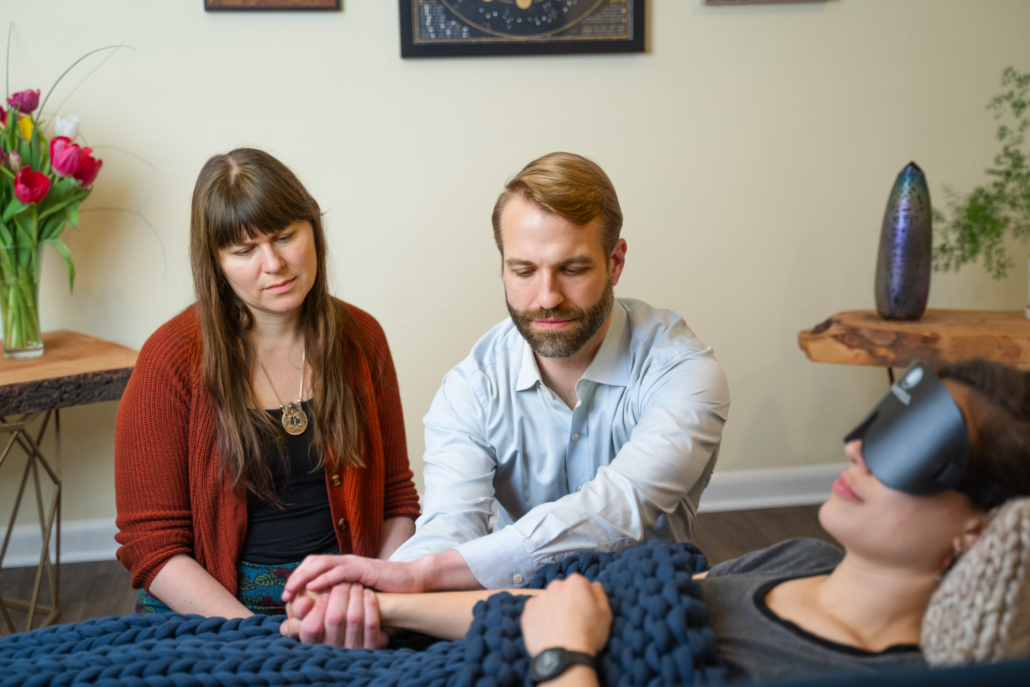
In the session, it’s not just gonna make you feel good. It’s going to potentially ask you to confront feelings that you don’t want to feel; feelings of sadness, fear, or even sometimes short term panic. Oftentimes, these are feelings people have had for a long time, dealing with issues that they have buried deep, and psychedelic medicine—in the context of supportive psychotherapy, like EMBARK, which is our approach to psychedelic assisted psychotherapy—can help people deal with things that they may not want to have wanted to have felt.
And so yes, you may be confronted with very difficult material. But if you actually want to get through that, to find relief on the other side, you have to confront difficulty and integrate that meaningfully into your life.
This is true for trauma work. We see that people who have specific experiences of trauma, the way forward is actually to go back and deal with trauma; even if it makes us afraid, even if it makes us stressed out in the moment. Stop avoiding the problem and actually meaningfully address it. But with enough support from your therapy team, in a safe set and setting where you have what you need at hand to do that kind of work.
And that’s the sort of treatment approach that we’re designing and implementing in our clinical trials.
If you met someone completely unfamiliar with psychedelics but interested in learning more, what books, TV shows, or films would you recommend to them?
There’s some great harm reduction practices for people who might be using this in the community, including RollSafe.org. I think Michael Pollan’s book How to Change Your Mind is really quite helpful, as well as Jim Fadiman’s book The Psychedelic Explorers Guide, and Bill Richards’ book on psychedelic medicine.
And you know, there’s some great articles out there. I wrote an article called Patient Experiences of Psilocybin-Assisted Psychotherapy: An Interpretative Phenomenological Analysis, which describes in really great detail what the patients experience. And you can read about it for yourself, in their own words, what patients have to say when they take psilocybin in our clinical trial at NYU. I think that reading that can be really illuminating.